17th-Century Markets (Mercatini del '600)
Bassano Romano travels back to the 1600s with historical pageants, taverns, and ancient crafts
About 17th-Century Markets
17th-Century Markets: Bassano Romano relives the 1600s
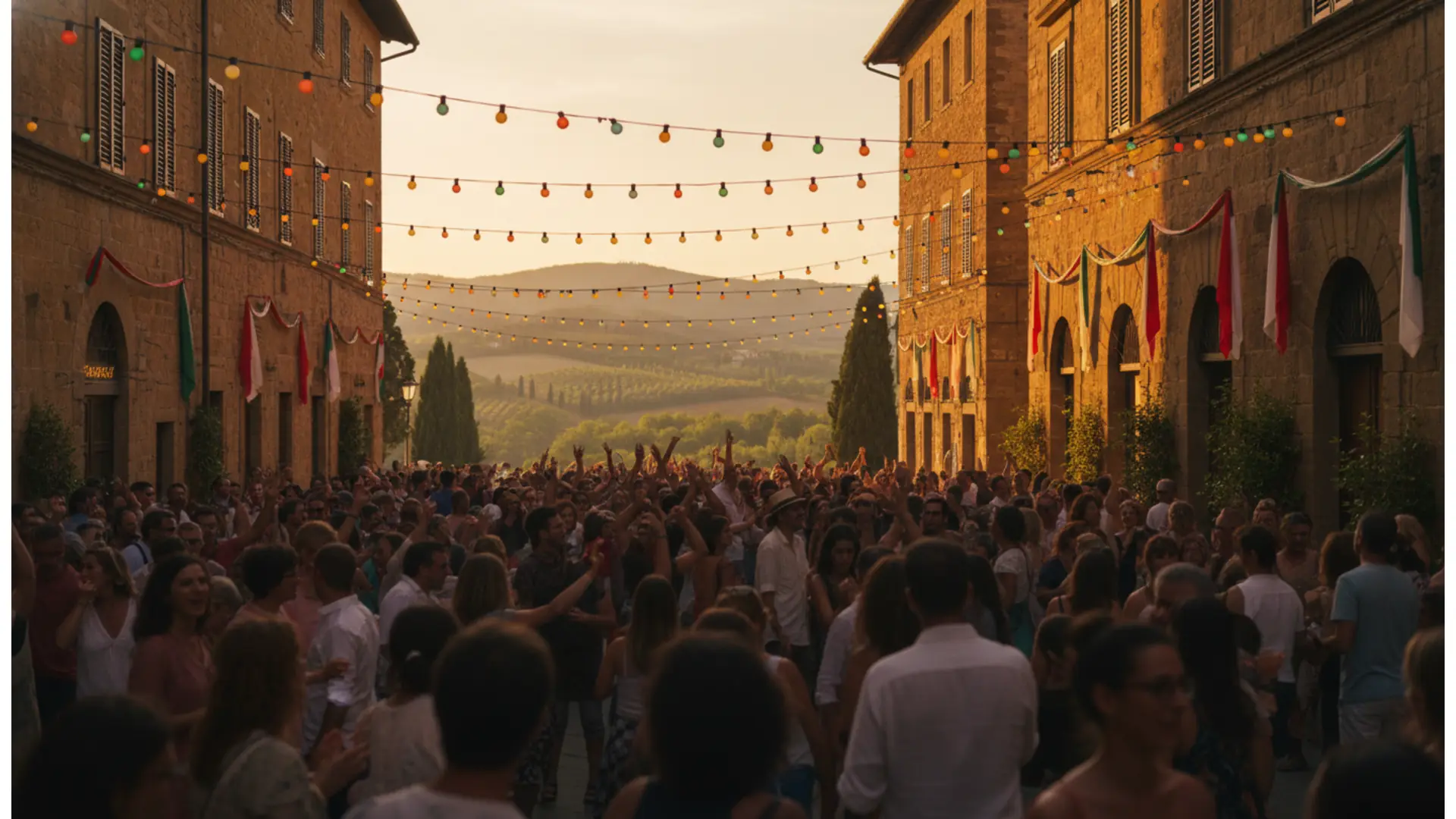
For a long summer weekend, the village of Bassano Romano, in the heart of the Tuscia region near Viterbo (Lazio), transforms into a grand Baroque stage. The 17th-Century Markets, also known as Mercatini del Seicento, are a historical re-enactment that has spent over thirty years transporting the historic center and its famous Villa Giustiniani back to the atmosphere of the early 17th century, drawing families, curious visitors, and history enthusiasts from across the region.
A tradition spanning over thirty years
The event celebrates a specific moment in local history: the elevation of the Marquisate of Bassano to a Principality, which took place in 1644 by the will of Pope Innocent X. Centered around this founding event linked to the noble Giustiniani family, the town has built a signature festival that stages processions, ceremonies, and costumed performers every year, offering visitors a glimpse into the splendor and daily life of the 1600s.
Villa Giustiniani, the heart of the event
One of the iconic landmarks of Bassano Romano, Villa Giustiniani (Palazzo Giustiniani-Odescalchi) with its park and small theater, serves as the main hub for the event and the starting point for the grand historical pageant. From here, ladies, knights, drummers, and flag-bearers wind through the village alleys, turning squares and picturesque corners into the natural stage for the re-enactment.
Processions, duels, and ancient crafts
Every corner of the historic center offers a reason to stop. The program weaves together:
- Historical pageant with drums, banners, and period characters;
- Sword duels and performances in the alleys;
- Ancient crafts with artisans demonstrating their work;
- Musicians and storytellers accompanying the evenings;
- the re-enactment of the investiture ceremony of the Princes of Bassano Romano.
Taverns and 17th-century cuisine
Gastronomy is an integral part of the festival. The local taverns serve traditional dishes and recipes inspired by the cuisine of the first half of the 1600s, creating a culinary journey that accompanies visitors throughout the evening. Among the offerings, a historic dessert rediscovered and reinterpreted by a local young pastry chef stands out, highlighting the bond between memory and the territory.
Why visit
The 17th-Century Markets are much more than a market: they are a journey through time that combines history, entertainment, and conviviality in one of the most charming villages of the Tuscia region. For those visiting the province of Viterbo and northern Lazio in summer, they represent an authentic opportunity to discover Bassano Romano, its Villa Giustiniani, and a community that proudly preserves its 17th-century heritage.
17th-Century Markets — edition 2026
2026 Edition
In 2026, Bassano Romano returned to the 17th century with an edition preceded, on June 21, by a preview dedicated to art: the exhibition of mosaics created by the Maieusis Community and the presentation of the artistic project linked to the event's cultural path. The main event took place from July 3 to 5, between Villa Giustiniani and the village alleys.
The program featured guided tours of the park and the small theater of Villa Giustiniani with a historical pageant, the re-enactment of the investiture ceremony of the Princes of Bassano Romano in Piazza Umberto I, and a musical concert at Villa Giustiniani, in addition to sword duels, artisans at work, musicians, storytellers, and taverns serving recipes inspired by the cuisine of the first half of the 17th century.
Programme 17th-Century Markets 2026
Preview
- June 21 — Exhibition of mosaics by the Maieusis Community and presentation of the event's artistic project.
July 3-5 (main event)
- Guided tours of the park and the small theater of Villa Giustiniani with a historical pageant;
- Grand historical pageant with drums, banners, and costumed characters, departing from Villa Giustiniani;
- Re-enactment of the investiture ceremony of the Princes of Bassano Romano, around 9:15 PM in Piazza Umberto I;
- Musical concert at Villa Giustiniani, around 9:45 PM;
- Sword duels, performances by musicians and storytellers in the alleys;
- Ancient crafts with artisans at work and taverns open with traditional dishes and 17th-century recipes.
Some times are indicative; for full details, please refer to the official event channels.
Highlights 17th-Century Markets 2026
- The re-enactment of the investiture of the Princes of Bassano in Piazza Umberto I;
- The grand historical pageant starting from Villa Giustiniani;
- Sword duels and ancient crafts in the village;
- Taverns with recipes inspired by the cuisine of the first half of the 17th century;
- The June 21 preview with the Maieusis Community mosaic exhibition.
Prices 17th-Century Markets 2026
Practical information — 17th-Century Markets
How to get there
Bassano Romano is located in the province of Viterbo, in the Lazio Tuscia. By car, it can be reached via the Via Cassia (SS2) and the junction with the Rome-Viterbo road; the village is about an hour from Rome. The Bassano Romano train station is served by the regional Rome-Viterbo line.
Entrance and taverns
The event takes place in the historic center and at Villa Giustiniani. Tastings in the taverns are paid according to the price list of individual stands. Comfortable footwear is recommended for the village alleys and cobblestones.
Information
Updates on dates, times, and the program are published on the official "I Mercatini del '600" Facebook page.
Festival-goer photos
No photos yet. Share yours!
Share your photos
5 photos max, 5 MB per photo (JPG, PNG, WebP)
Noticed an error or missing information?
Help us keep this listing up to date. Every proposal is verified by our team before publication.
Festival-goer reviews
No rating yet — be the first!
No comments yet. Be the first!
Were you there?
Share your experience with the community.
Published by Valentin Contard, festival listings writer. Reviewed, corrected and approved by Christophe Contard, editor-in-chief. .
Where does it take place — 17th-Century Markets
Villa Giustiniani (Palazzo Giustiniani-Odescalchi) e centro storico