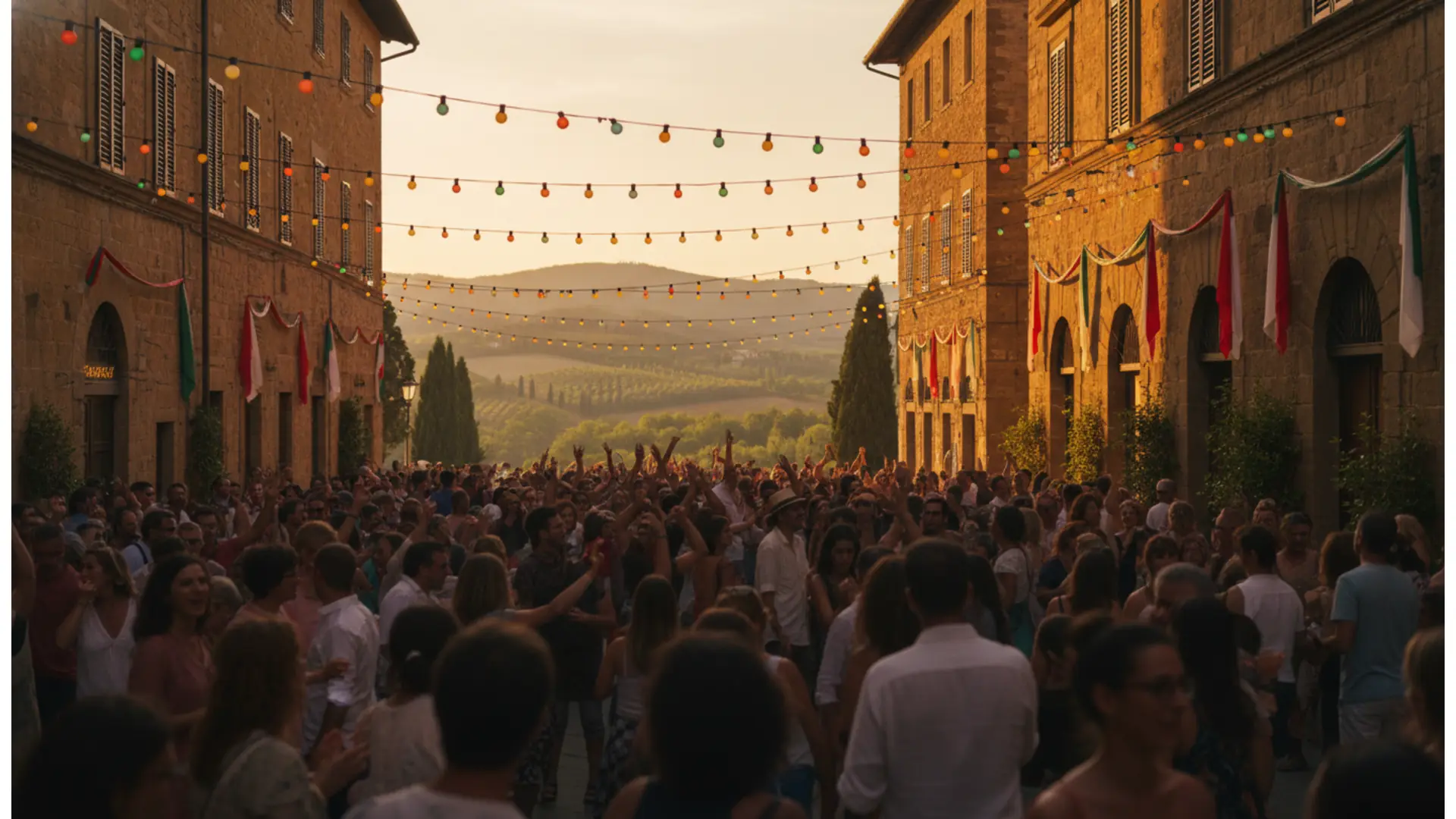
Palio of the Contrade of Artena
The grand 17th-century historical re-enactment featuring the ten districts of the Lepini Mountains
About Palio of Artena
A grand 17th-century re-enactment in the heart of the Lepini Mountains
The Palio of the Contrade of Artena is one of the most popular historical events in Lazio and the entire area south of Rome. Each year, during the first ten days of August, the town of Artena (Metropolitan City of Rome Capital) brings the 17th century back to life, when the village was known as Montefortino and served as a fiefdom of the noble Borghese family. The re-enactment celebrates a true historical event: the visit of Pope Paul V, born Camillo Borghese, who arrived in Montefortino on October 11, 1615, while the fiefdom was governed by his nephew, Cardinal Scipione Borghese.
The ten districts in competition
The heart of the festival is the challenge between the ten districts into which the Artena territory is ideally divided: Centro Storico, Colubro, Macere, Maiotini, Selvatico, Torretta, Valli, Via Giulianello, Via Latina, and Via Velletri. For ten days, each district puts its pride and sense of belonging to the test, setting up its own food stall at Villa Borghese and preparing the participants for the historical pageant.
The Baroque Dinner and the historical pageant
The celebrations open with the theatrical Baroque Dinner in the square, presided over by a participant representing the Cardinal, who announces the arrival of the Pontiff. This is followed by the historical pageant, featuring over a thousand participants in period costumes: nobles, commoners, musicians, and flag-wavers, along with the papal court and the Swiss Guard, accompanied by mules, donkeys, horses, and oxen. The parade winds its way up from the lower part of the town to Piazza della Vittoria, creating one of the most evocative images of the Lazio summer.
The twenty-two folk games
Over the following evenings, the districts compete for the Palio — a banner painted each year by a local artist — through twenty-two folk games inspired by traditional rural life: from wheelbarrow racing to dialect singing, relay races, tug-of-war, hoop racing, jump rope, barrel racing, wheat threshing, log cutting, archery, the quintana joust, and the brigand's game. Traditionally, the donkey race concludes the event and determines the winning district.
Villa Borghese, the heart of the festival
The large Villa Borghese park, the green lung of Artena, hosts the competitions and the food and wine stalls managed by the districts, where visitors can taste dishes from the cuisine of Artena and the Lepini Mountains. Every evening, thousands of people flock to the area; recent editions have recorded up to one hundred thousand total visitors over the ten-day period.
An identity-defining event for Artena and Lazio
Established in the early 1990s, the Palio has become a powerful vehicle for collective memory and community identity. It is not just a show for visitors, but the most cherished festival of the year for the inhabitants of Artena, who work on it for months. For those arriving from outside, it is the ideal opportunity to discover an authentic village in the province of Rome, its history linked to the Borghese family, and a popular tradition that remains deeply rooted and alive.
Palio of Artena — edition 2026
Palio of the Contrade of Artena 2026
From July 31 to August 9, 2026, Artena returns to the 17th century for the new edition of the Palio of the Contrade. As per tradition, the festival opens with the Baroque Dinner in the square and the grand historical pageant that re-enacts the visit of Pope Paul V to Montefortino, before moving into full swing with the competitions between the ten districts at Villa Borghese.
Over the ten evenings, the districts compete in twenty-two folk games of the rural tradition — from wheat threshing to tug-of-war, from the quintana joust to barrel racing — to win the Palio banner. The districts' food stalls enliven the park every evening with typical dishes from the Lepini Mountains.
Programme Palio of Artena 2026
Event structure (ten days, July 31 - August 9, 2026)
- Baroque Dinner in the square: opening banquet presided over by the Cardinal's representative announcing the Pontiff's arrival
- Historical pageant: parade of over a thousand costumed participants (nobles, commoners, musicians, flag-wavers, papal court with Swiss Guards, mules, donkeys, horses, and oxen) from the lower town to Piazza della Vittoria
- District games at Villa Borghese: twenty-two folk games between the ten districts (wheelbarrow racing, dialect singing, relay races, tug-of-war, hoop racing, jump rope, barrel racing, wheat threshing, log cutting, archery, quintana joust, brigand's game, and others)
- Donkey race: final competition that determines the winning district and the awarding of the banner
- Food stalls of the districts with specialties of Artena cuisine
The detailed day-by-day calendar and schedules are published on the official Palio channels closer to the event.
Highlights Palio of Artena 2026
- Historical pageant with over a thousand participants in 17th-century costumes
- The spectacular Baroque Dinner in the square
- Challenge between the ten districts in twenty-two folk games
- Flag-wavers, musicians, and the papal court with the Swiss Guard
- Final donkey race and banner awarding
Prices Palio of Artena 2026
Practical information — Palio of Artena
How to get there
Artena is located about 40 km southeast of Rome, in the Lepini Mountains. By car: take the A1 motorway and exit at Valmontone, then follow the SS600 Ariana. By train: take the train to the Colleferro-Segni-Paliano station on the Rome-Cassino line, with bus connections to Artena. Regional Cotral buses from Rome are also available.
Admission and hours
The events take place in the historic center and at Villa Borghese, mainly in the evening. Access to the festival area and shows is generally free; the districts' food stalls charge for their offerings. For the detailed program and daily schedules, it is recommended to check the official Palio channels.
Tips
The evenings are very crowded: it is advisable to arrive early for the historical pageant and the Baroque Dinner. In August, evenings in the Lepini Mountains can be cool.
Festival-goer photos
No photos yet. Share yours!
Share your photos
5 photos max, 5 MB per photo (JPG, PNG, WebP)
Noticed an error or missing information?
Help us keep this listing up to date. Every proposal is verified by our team before publication.
Festival-goer reviews
No rating yet — be the first!
No comments yet. Be the first!
Were you there?
Share your experience with the community.
Published by Valentin Contard, festival listings writer. Reviewed, corrected and approved by Christophe Contard, editor-in-chief. .
Where does it take place — Palio of Artena
Villa Borghese di Artena