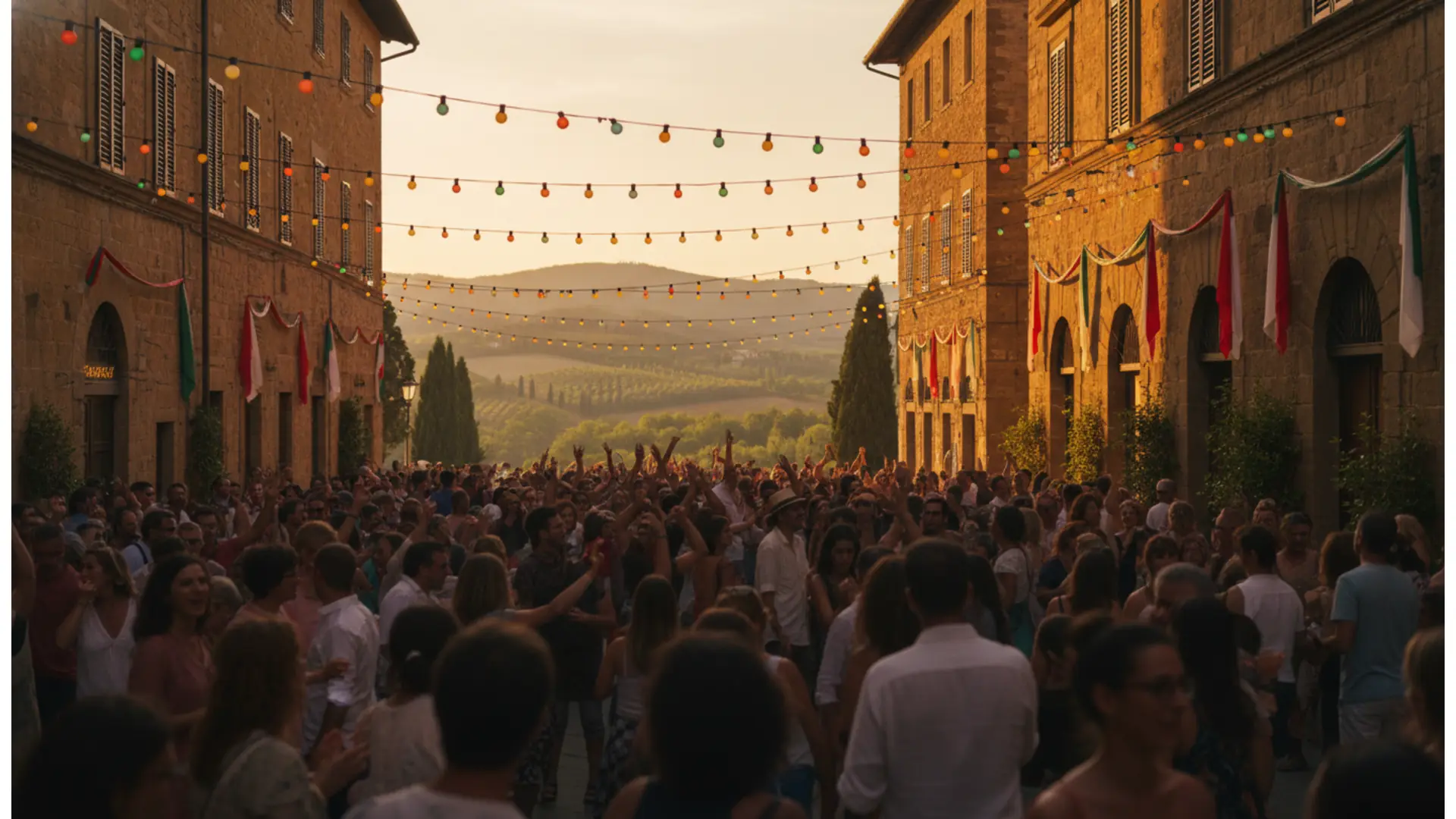
ItaliaFestival - Village Regeneration and Festival
Three days of forums, concerts, and performances in Sessa Cilento on the role of culture in Italy's inland areas
About Village Regeneration and Festival
A festival that tells the story of village regeneration
The Village Regeneration and Festival is the event through which ItaliaFestival brings to Sessa Cilento, a small municipality in the province of Salerno in Campania, a collective reflection on a theme affecting much of Italy's interior: how culture can become a true economic engine in marginalized territories hit by depopulation. This is not a closed conference for experts: the format alternates forums and debates with performances, concerts, and electronic sets, based on the idea that the regeneration of villages must also be told through artistic languages.
The event is spread over three days, between the Municipal Council Hall of Sessa Cilento and the San Mango Amphitheatre, the hamlet that hosts the evening outdoor events. Admission is free for all events, including forums and concerts.
National forums and case studies from across Italy
The core of the festival is a series of forums dedicated to the network of festivals in inland areas at risk of depopulation. Each meeting starts from a real case study, chosen to represent a different cultural geography of the country:
- North — the experience of Oriente Occidente in Rovereto, to reflect on culture and creative enterprise in marginalized territories;
- South — the Time in Jazz festival in Sardinia, as an example of social innovation and new cultural economies in the Mezzogiorno;
- Center — the Appennino Festival in the Piacenza area, focusing on the intersection of community, landscape, and cultural identity.
Artistic directors, scholars, cultural operators, and local administrators sit around the tables, called to compare models and practices capable of generating value through culture, innovation, participation, and cohesion.
Music at the San Mango Amphitheatre
The evenings move to the San Mango Amphitheatre, where the festival offers a deliberately heterogeneous musical program. It ranges from the performance of Giuseppe Moffa with Lorenzo Mastrogiuseppe to the Rebirth electronic set by Simone Bosco, and the concert of Neapolitan singer-songwriter Gnut together with Alessandro D'Alessandro, one of the most recognizable voices of the new Campanian songwriting scene. Alongside the music, there are performance moments and book presentations, such as the essay Z Gen. Teorie e modelli di un racconto generazionale by Alfonso Amendola.
The “Il Borgo dei Mulini” project and PNRR funds
The festival does not stand alone: it is the most visible stage of the “Il Borgo dei Mulini” project, the cultural and productive regeneration initiative promoted by the Municipality of Sessa Cilento and funded by the European Union – NextGenerationEU as part of Investment 2.1 “Attractiveness of historic villages” of the PNRR M1C3, promoted by the Ministry of Culture. The project works on the restoration of the ancient water mills of the Valle dei Mulini and Cilento grains, with a program that includes Mediterranean cooking masterclasses, summer schools on agriculture and community, workshops on traditional crafts, and nature walks throughout the year.
Sessa Cilento, a village within the National Park
Sessa Cilento is located in the Cilento, Vallo di Diano and Alburni National Park, a few kilometers from the Tyrrhenian coast of the Salerno area and the Living Museum of the Mediterranean Diet in Pioppi. It is a territory of cultivated hills, stone mills, and scattered hamlets — San Mango among them — where the issue of depopulation is not an abstract theme but a daily reality. This is precisely why the choice of ItaliaFestival, the association that brings together dozens of Italian festivals, to hold its forums here takes on a symbolic value: discussing inland areas from within, rather than talking about them from afar.
Why it's worth visiting
Those arriving in Sessa Cilento during the festival days will find an unusual format: in the morning, cultural policies are discussed with national-level speakers; in the evening, music is enjoyed in an open-air amphitheater overlooking the Cilento hills. Everything is free, in a village where distances are covered on foot and the audience is composed of both professionals and residents. It is the perfect opportunity to combine a visit to inland Cilento — less frequented than Paestum and the coast — with three evenings of live music.
Village Regeneration and Festival — edition 2026
Three days between debate and music
The 2026 edition of the Village Regeneration and Festival concluded the PNRR Villages cycle promoted by ItaliaFestival with the Municipality of Sessa Cilento. The common thread was the network of festivals in inland areas at risk of depopulation, investigated through three case studies from Northern, Southern, and Central Italy: Oriente Occidente of Rovereto, Time in Jazz in Sardinia, and the Appennino Festival of the Piacenza area.
Alongside the forums, the San Mango Amphitheatre hosted the musical part: the performance of Giuseppe Moffa with Lorenzo Mastrogiuseppe, the Rebirth electronic set by Simone Bosco, and the concert of Gnut and Alessandro D'Alessandro. Sunday closed with a debate on community, landscape, and cultural identity, and a performance by Maddalena Scagnelli in the Municipal Council Hall. All events were free of charge.
Programme Village Regeneration and Festival 2026
Friday, June 26, 2026
- 16:30 — Municipal Council Hall, Sessa Cilento: presentation of the essay “Z Gen. Teorie e modelli di un racconto generazionale” by Alfonso Amendola
- 18:30 — San Mango Amphitheatre: performance by Giuseppe Moffa with Lorenzo Mastrogiuseppe
- 21:30 — San Mango Amphitheatre: “Rebirth”, electronic set by Simone Bosco
Saturday, June 27, 2026
- 10:00 — Forum “Culture and creative enterprise in marginalized territories”, starting from the experience of the Oriente Occidente festival in Rovereto
- 16:00 — Forum “Social innovation and new cultural economies”, focus on the Mezzogiorno with the case of the Time in Jazz festival
- 21:30 — San Mango Amphitheatre: concert by Gnut with Alessandro D'Alessandro
Sunday, June 28, 2026
- 10:00 — Forum on community, landscape, and cultural identity of Central Italy, with the case of the Appennino Festival (Piacenza)
- Municipal Council Hall: performance by Maddalena Scagnelli
All events were free and open to the public.
Highlights Village Regeneration and Festival 2026
- The concert by Gnut with Alessandro D'Alessandro at the San Mango Amphitheatre
- The Rebirth electronic set by Simone Bosco under the Cilento sky
- Three national forums on the festival network in inland areas, with case studies from Northern, Southern, and Central Italy
- The presentation of the essay Z Gen by Alfonso Amendola
- Free admission to every meeting and concert
Prices Village Regeneration and Festival 2026
Practical information — Village Regeneration and Festival
How to get there
By car: take the Vallo della Lucania / Omignano exit from the Strada Statale 18 Tirrena Inferiore or from the Salerno–Reggio Calabria highway, then follow provincial roads towards Sessa Cilento; the village is about 90 km from Salerno. The hamlet of San Mango can be reached in a few minutes from the center.
By train: Omignano Scalo or Vallo della Lucania–Castelnuovo station on the Tyrrhenian line, then local bus or taxi.
By plane: Salerno–Costa d'Amalfi or Naples Capodichino airport, then rental car.
Venues
Municipal Council Hall of Sessa Cilento for forums, presentations, and daytime performances; San Mango Amphitheatre for evening outdoor concerts.
Admission
All events are free and open to the public, including meetings and concerts.
Tips
The evenings at the amphitheater are outdoors: it is advisable to bring a light sweater even in June. For accommodation, the local offer consists mainly of B&Bs and farmhouses within a few kilometers, with the coast of Acciaroli and Pioppi a short distance away. Do not miss the Living Museum of the Mediterranean Diet in Pioppi and the trails of the Valle dei Mulini nearby.
Contacts
“Il Borgo dei Mulini” Project — [email protected], tel. +39 334 3519857.
Festival-goer photos
No photos yet. Share yours!
Share your photos
5 photos max, 5 MB per photo (JPG, PNG, WebP)
Noticed an error or missing information?
Help us keep this listing up to date. Every proposal is verified by our team before publication.
Festival-goer reviews
No rating yet — be the first!
No comments yet. Be the first!
Were you there?
Share your experience with the community.
Published by Valentin Contard, festival listings writer. Reviewed, corrected and approved by Christophe Contard, editor-in-chief. .
Where does it take place — Village Regeneration and Festival
Aula Consiliare di Sessa Cilento e Anfiteatro di San Mango