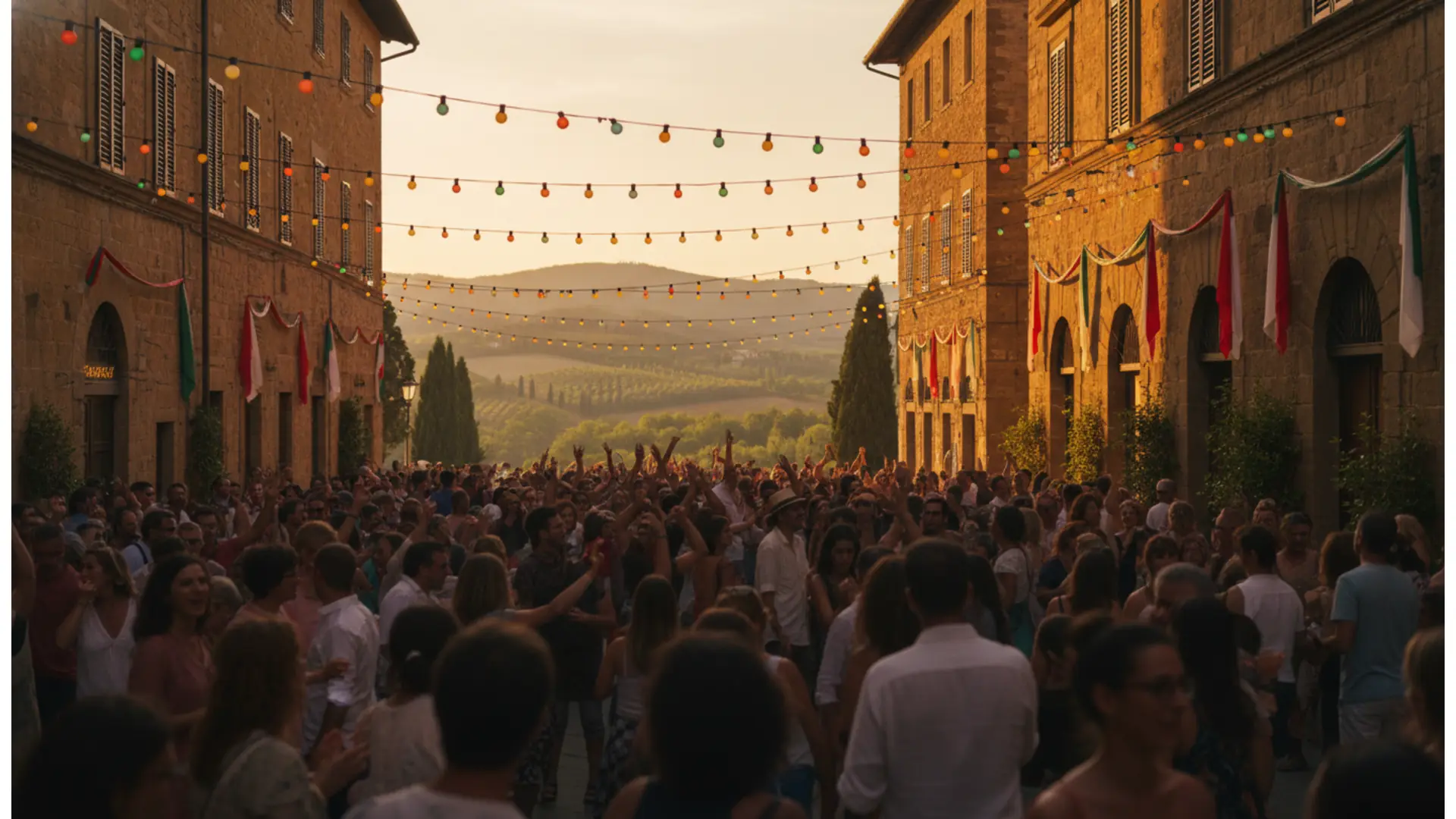
Gulf Carnival
Allegorical floats and masked groups across Santa Marina, Policastro Bussentino, and Sapri
About Gulf Carnival
A Carnival that unites the Gulf of Policastro
The Gulf Carnival was born from a simple and winning idea: instead of many small, separate parades, a single grand program shared by the municipalities overlooking the Gulf of Policastro, at the far south of the province of Salerno, in Campania. The project brings together the Municipality of Santa Marina, with its hilltop main town and the seaside hamlets of Policastro Bussentino and Scario, and the neighboring Municipality of Sapri, involving masked groups from the entire Bussento and lower Cilento area.
The result is a multi-stage event that unfolds throughout the Carnival period: every Sunday, the procession moves from one town to another, and on Shrove Tuesday, the squares fill with children in costume. This formula multiplies the audience, spreads the festivities across the territory, and allows the floats built in local workshops to parade multiple times before thousands of people.
Allegorical floats, masked groups, and traveling juries
The heart of the event lies in the allegorical floats and masked groups prepared for months by local associations, parishes, and town committees. Each group chooses a theme, creates costumes, and prepares music and choreography, presenting themselves to the judgment of a different jury for every stage: they evaluate originality, technique, charisma, adherence to the theme, and choreography, with the final score determined by the sum of the various evenings.
- Afternoon parades through the historic centers and along the promenades
- Themed allegorical floats built by local groups
- Masked groups with choreography and live or recorded music
- Entertainment and shows dedicated to children
- Final awards ceremony with recognition for the best float, best masked group, and best individual costume
In recent years, up to ten towns in the district have participated in the procession — including Sapri, Santa Marina, Policastro Bussentino, Scario, Torraca, Tortorella, Caselle in Pittari, Celle di Bulgheria, and Lentiscosa — confirming how the inter-municipal formula has expanded the reach of the festival.
Organizers
The organization is entrusted to the local Pro Loco associations: the Pro Loco Buxentum of Policastro Bussentino for the Santa Marina and Policastro stages, and the Pro Loco Sapri for the Sapri events, with the support of their respective municipalities. It is a labor of pure volunteerism, involving dozens of people in setup, security, logistics, and hosting guest groups.
Cilento in masks, out of season
The Gulf Carnival also holds tourism value: it brings life and visitors to a stretch of coast that slows down significantly in winter. Those arriving in February find a different Cilento compared to the seaside season, with the winter sea, quiet villages, seasonal cuisine, and traditional period sweets — such as chiacchiere, sanguinaccio, zeppole, and traditional Campanian fried treats — that accompany the festivities in homes and bars.
The area, moreover, is not lacking in points of interest: Policastro Bussentino preserves its cathedral and the layout of the ancient Greek Pyxous, later the Roman Buxentum; Scario is one of the most beautiful landings on the Cilento Coast; Sapri holds the memory of the Carlo Pisacane expedition; and Santa Marina overlooks the entire gulf from above. All around stretches the Cilento, Vallo di Diano and Alburni National Park, a UNESCO World Heritage site.
Why attend
It is not a monumental carnival like those in Viareggio or Putignano: it is an authentic village festival where the floats are handmade by local youths, and spectators almost always end up dancing. Those looking for the real Carnival, the kind experienced in the square rather than from a grandstand, will find exactly that in lower Cilento.
Gulf Carnival — edition 2026
A multi-stage edition, between postponements and great participation
The 2026 Gulf Carnival was structured as a true traveling festival in the Gulf of Policastro, with events spread over three weeks between the Municipality of Santa Marina — the main town and the hamlet of Policastro Bussentino — and the Municipality of Sapri.
The initial calendar scheduled the opening in Policastro Bussentino on Sunday, February 8, the Sapri stage on the 15th, and the Shrove Tuesday celebration on February 17 in Santa Marina and Policastro. However, weather conditions forced the postponement of the Policastro stage to February 22, redesigning the program: the festival restarted from Sapri, crossed Shrove Tuesday in the squares of Santa Marina, arrived in Policastro on February 22, and closed with the finale in Sapri on Sunday, March 1.
Ten towns in procession
Groups and floats from ten municipalities in the district took part in the Policastro stage, including Sapri, Santa Marina, Scario, Torraca, Tortorella, Caselle in Pittari, Celle di Bulgheria, and Lentiscosa. Santa Marina presented the group « I Custodi dell'equilibrio » (The Guardians of Balance), awarded by the public for the attention to costumes and for a message built around the themes of inclusivity and respect for natural elements.
Juries and awards
As per the event's tradition, each stage had a different jury: the scores assigned in Policastro and Sapri were added together to determine the final winners, evaluating originality, technique, charisma, adherence to the theme, and choreography. The final awards ceremony took place on the Sapri promenade at the end of the March 1 procession.
Programme Gulf Carnival 2026
Sunday, February 15, 2026 — Sapri
- 2:00 PM — Gathering of floats and masked groups in Piazza del Plebiscito
- 2:30 PM — Parade through the city streets
Tuesday, February 17, 2026 (Shrove Tuesday) — Santa Marina and Policastro Bussentino
- 3:00 PM — Masquerade party in Piazza Umberto I in Santa Marina and Piazza Duomo in Policastro Bussentino
Tuesday, February 17, 2026 — Sapri
- 3:00 PM - 4:00 PM — Registration for « Children in masks », promenade, entertainment area
- 4:00 PM — Masked parade and awards ceremony
- 7:00 PM — Lighting of the Befana and final toast
Sunday, February 22, 2026 — Policastro Bussentino (stage postponed from Feb 8 due to bad weather)
- 1:00 PM — Gathering of groups and floats at the sports field
- 2:00 PM — Parade through the village streets
- Following — Awards, dancing, music, and children's entertainment at the Villa Comunale
Sunday, March 1, 2026 — Sapri, finale
- 2:30 PM — Departure of the procession from Piazza San Giovanni, then via Kennedy and the promenade
- Following — Shows, group performances, and final awards
In the initial program, the Policastro stage on February 8 also included a children's show at 12:00 PM at the Villa Comunale.
Highlights Gulf Carnival 2026
- Shrove Tuesday celebration, February 17, in Piazza Umberto I in Santa Marina and Piazza Duomo in Policastro Bussentino
- Ten towns of the Gulf of Policastro in procession with allegorical floats and masked groups
- The Santa Marina group « I Custodi dell'equilibrio », featuring elaborate costumes and a message on inclusivity
- Children's masked parade and lighting of the Befana on the Sapri promenade
- Grand finale on March 1 in Sapri, with a procession from Piazza San Giovanni to the promenade and final awards
Prices Gulf Carnival 2026
Practical information — Gulf Carnival
How to get there
By car: take the Padula-Buonabitacolo exit on the A2 del Mediterraneo motorway, then the SS517 and SS18 towards the Gulf of Policastro; or the SS18 along the coast from Sapri. The main town of Santa Marina can be reached from the coast via a short, scenic climb.
By train: the Sapri station, on the Naples-Reggio Calabria line, is served by Frecce and Intercity trains and is just a few kilometers from Policastro Bussentino and Santa Marina; from there, continue by bus or taxi.
Where it takes place
The stages are held in Piazza Umberto I in the main town of Santa Marina, in Piazza Duomo, at the sports field and the Villa Comunale in Policastro Bussentino, and between Piazza del Plebiscito, Corso Italia, and the promenade in Sapri.
Tips
- Arrive at least half an hour early: on parade days, parking near the route fills up quickly.
- Dress in layers: in February, the sun is warm on the gulf, but the temperature drops after sunset.
- The event takes place outdoors: in case of bad weather, stages may be postponed, as has happened in the past. Always check for updates from the Pro Loco associations before traveling.
- To register a float or a masked group, you must contact the organizing Pro Loco associations in advance.
Contacts
Pro Loco Buxentum (Policastro Bussentino and Santa Marina): +39 328 7254305 — Pro Loco Sapri: +39 331 8252760.
Festival-goer photos
No photos yet. Share yours!
Share your photos
5 photos max, 5 MB per photo (JPG, PNG, WebP)
Noticed an error or missing information?
Help us keep this listing up to date. Every proposal is verified by our team before publication.
Festival-goer reviews
No rating yet — be the first!
No comments yet. Be the first!
Were you there?
Share your experience with the community.
Published by Valentin Contard, festival listings writer. Reviewed, corrected and approved by Christophe Contard, editor-in-chief. .
Where does it take place — Gulf Carnival
Piazza Umberto I, Santa Marina capoluogo (e Piazza Duomo a Policastro Bussentino)
Piazza Umberto I, 84067 Santa Marina