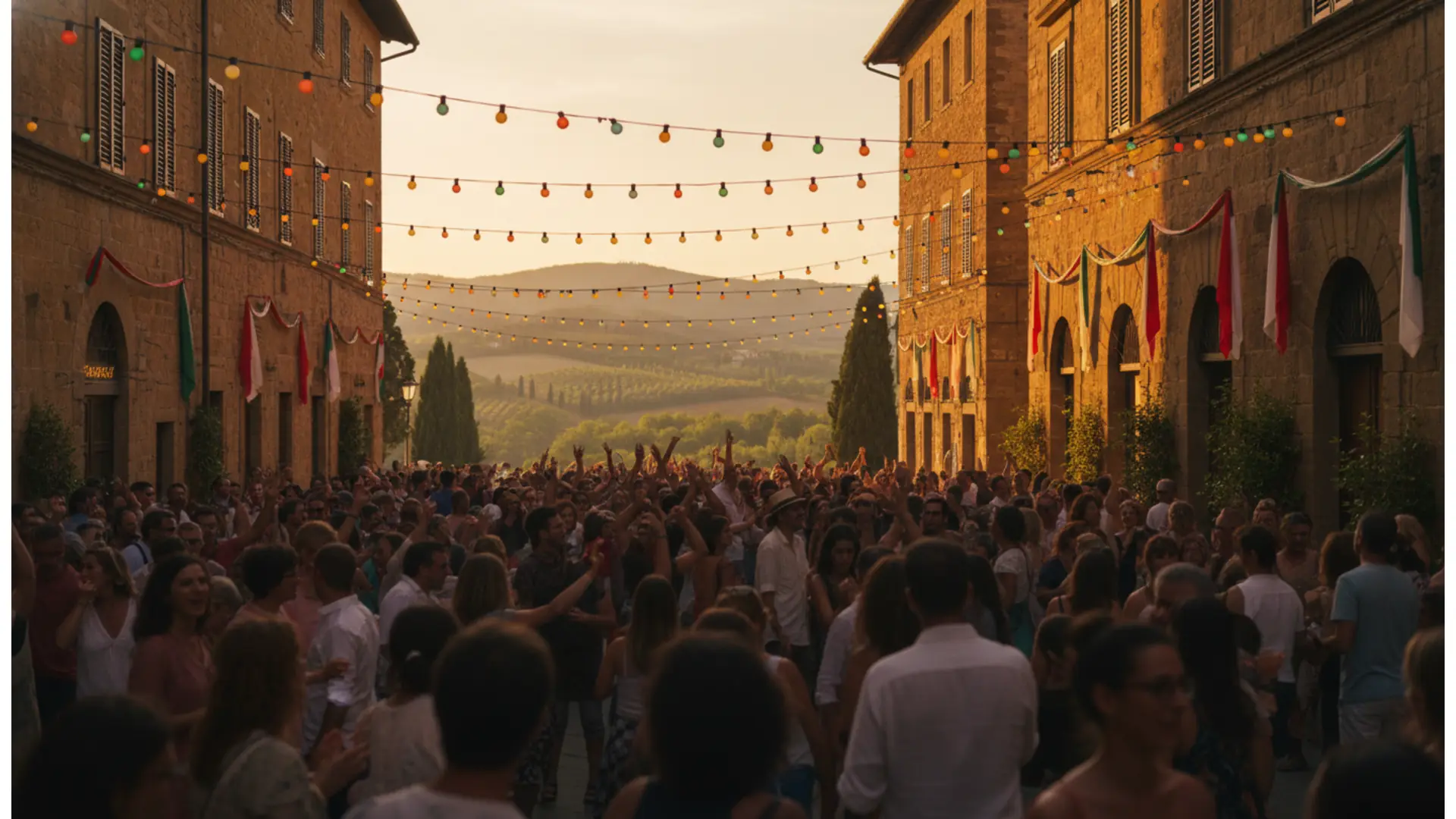
Castignano Historical Carnival
The centuries-old procession of Li Moccule in the heart of Piceno
About Carnival of Castignano
A Carnival with Ancient Roots
In the heart of Piceno, perched on a spur of travertine, the medieval village of Castignano (in the province of Ascoli Piceno, in the Marche region) preserves one of the region's oldest and most distinctive carnivals. The first documentary evidence dates back to at least 1615, when municipal archives already contained regulations on carnival celebrations. But what truly makes this carnival unique is its continuity: after the Unification of Italy, the tradition died out everywhere except here, where it has been passed down uninterruptedly at least since 1861. This is why Castignano proudly calls its event a Historical Carnival.
Li Moccule, the Heart of the Festival
The absolute symbol of the event is the procession of Li Moccule, a direct descendant of the famous Roman "moccoletti" that concluded carnival in the Papal States. The moccoli are handmade lanterns built on bamboo canes, ending in faceted rhomboidal shapes, covered with colored tissue paper and lit by a candle inside. To the sound of the Catubba, the traditional drum, the first lights gather in the alleys and invite everyone to join the procession with the famous dialect cry: "Fora fora li moccule!".
A river of colored lights floods the narrow streets of the historic center amidst folk songs, music, and merriment, culminating in the main square. Here, after the traditional singing, the "battle of the moccoli" erupts: the destroyed lanterns feed a purifying bonfire symbolizing the release from the sins of the past year. The youngest jump over the flames for good luck, and fireworks conclude the festivities as Carnival gives way to Lent.
Masked Balls, Floats, and Masks
In addition to the procession, the program unfolds over several days with the Grand Opening Ball, the Masked Ball, the "pizza onta" (greasy pizza) in the square, the proclamation of King Carnival on Fat Thursday, and the Children's Carnival. Shrove Tuesday is the highlight: the parade of groups and allegorical floats winds through the town before the evening descent of the Moccoli.
A Living Tradition
Organized by the Pro Loco Castignano along with the entire community, the Castignano Historical Carnival has gained increasing national and international attention in recent years, while remaining true to its popular and authentic dimension. Visitors to Castignano during this period are not witnessing a show for tourists but are entering a collective ritual that the town has proudly celebrated for centuries.
Carnival of Castignano — edition 2026
The Castignano Historical Carnival 2026 enlivened the village of Castignano (AP) for over ten days of festivities, including masked balls, masks, allegorical floats, and the unmissable ritual of Li Moccule. The event, organized by Pro Loco Castignano, confirmed its character as the most authentic historical carnival of the Piceno region, attracting visitors from all over the region for the spectacular procession of lit lanterns and the final purifying bonfire.
Programme Carnival of Castignano 2026
Saturday, February 7 — Opening
- From 11:00 PM — Grand Opening Ball "Gran galà castignà: lu cuntadi vestite a festa", with live music by I Pupazzi and DJ N-Tic, at the Predaia Multifunctional Structure (Contrada Galvoni).
Thursday, February 12 — Fat Thursday
- 5:00 PM — "Pizza onta" in the square, competition, and proclamation of King Carnival in Piazza Umberto I, in the historic center.
Saturday, February 14
- Grand Masked Ball.
Monday, February 16
- Children's Carnival, with entertainment and a party dedicated to the little ones.
Tuesday, February 17 — Shrove Tuesday
- Parade of groups and allegorical floats through the town streets.
- In the evening, the Procession of Li Moccule: procession of handmade lanterns with the cry "Fora fora li moccule!", battle of the moccoli, and final purifying bonfire.
Highlights Carnival of Castignano 2026
Prices Carnival of Castignano 2026
Practical information — Carnival of Castignano
How to Get Here
Castignano can be reached by car from the A14 motorway exit at San Benedetto del Tronto or Grottammare, continuing towards the Piceno hinterland (about 30-40 minutes). The nearest train station is San Benedetto del Tronto, on the Adriatic line.
When
The festivities are concentrated in the days of Carnival, between late January and Shrove Tuesday, with the procession of Li Moccule as the culminating moment.
Admission
The parades and the procession in the historic center are free and open to all. Some evening balls may require an entrance fee.
Information
Pro Loco Castignano, e-mail [email protected], and the official Facebook page of the Carnevale Storico Castignanese.
Festival-goer photos
No photos yet. Share yours!
Share your photos
5 photos max, 5 MB per photo (JPG, PNG, WebP)
Noticed an error or missing information?
Help us keep this listing up to date. Every proposal is verified by our team before publication.
Festival-goer reviews
No rating yet — be the first!
No comments yet. Be the first!
Were you there?
Share your experience with the community.
Published by Valentin Contard, festival listings writer. Reviewed, corrected and approved by Christophe Contard, editor-in-chief. .
Where does it take place — Carnival of Castignano
Centro storico di Castignano
Piazza Umberto I, 63072 Castignano