Balconica
The festival of suspended stages in the heart of Cilento
Edition 2026 not confirmed to date
This edition has not been confirmed by the organiser to date. We recommend checking before going.
About Balconica
A festival that looks out from the balconies
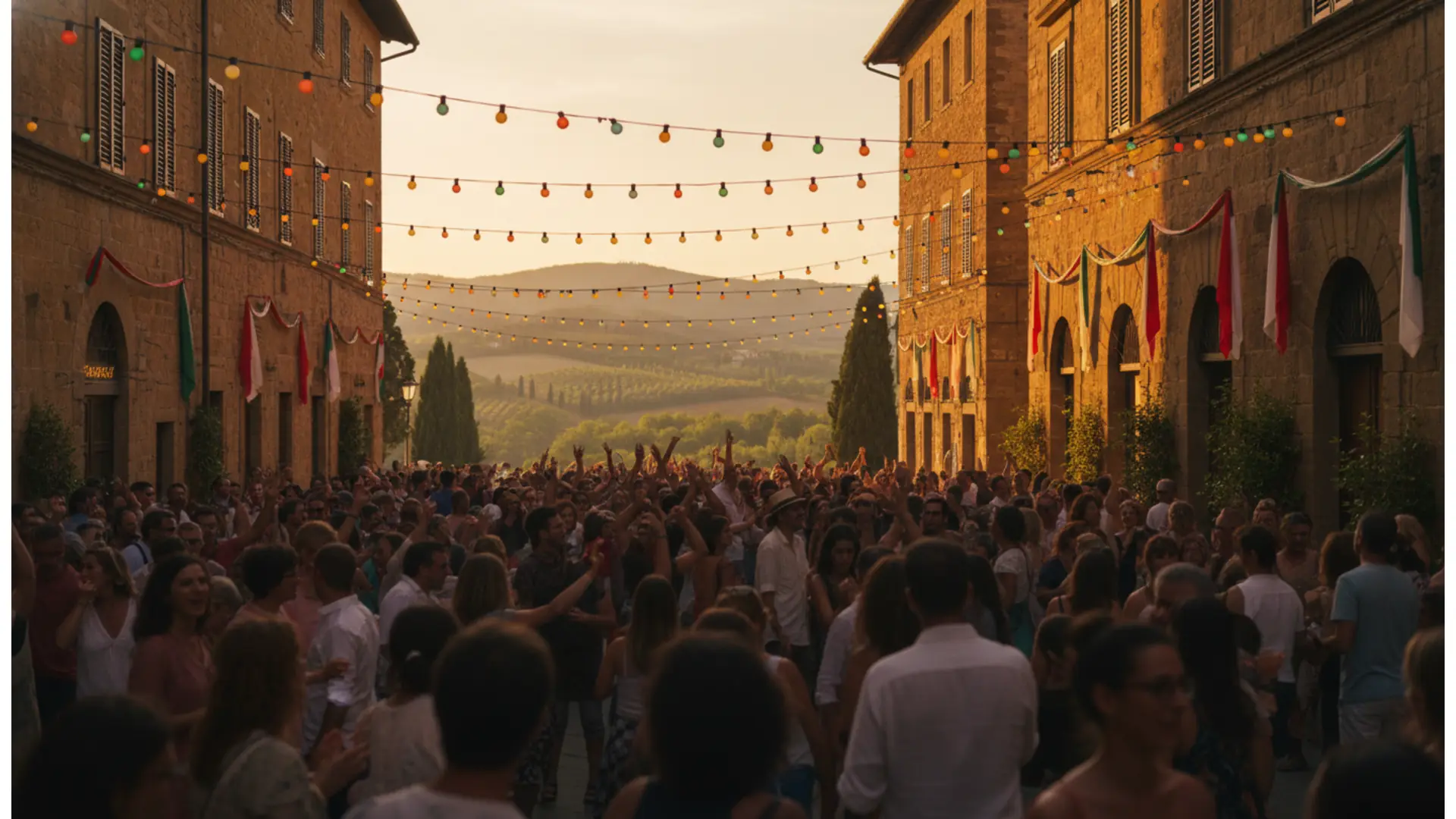
In Futani, a village of a few hundred inhabitants in the heart of Cilento, in the province of Salerno (Campania), something unique happens every autumn: the railings and balconies of the historic center's houses turn into stages. This is the origin of the nickname by which the event is known everywhere: the festival of "suspended stages," or more simply, "the festival that looks out from the balconies." The audience doesn't sit in a theater; they walk through the alleys, stop under a window, look up, and find a guitarist, an actor, or a voice reciting verses. Then they move on, and a few meters later, another scene begins.
Since 2014, a creative response to marginalization
Balconica was born in 2014 as a concrete and creative response to the social and cultural marginalization that long characterized Futani and the small towns of the Cilento hinterland. The organizers' intuition was simple yet radical: if theaters and cultural spaces are missing, build them with what the village already has—houses, small squares, external staircases, walls, and balconies. Year after year, the festival has grown to become an event recognized far beyond the provincial borders, hosting musicians, actors, painters, and performers from all over Italy and Europe.
The event is organized by the Balconica APS association with the patronage of the Municipality of Futani and the support of public and local bodies, including the Campania Region, the Cilento, Vallo di Diano and Alburni National Park, the Salerno Chamber of Commerce, and local cooperative credit institutions.
Two days, many disciplines
Balconica is a deliberately multidisciplinary festival: no genre takes precedence, and the program mixes different languages throughout the day. Over the years, the audience has enjoyed:
- Balcony concerts: singer-songwriter, indie, rock, electronic, folk music, and experimental projects, often in small formations to fit the limited space of a windowsill.
- Theater, monologues, and storytelling, with performers sharing tales of the South just meters away from the spectators.
- Poetry and interactive readings, moments where written text leaves the books to be shared aloud in the squares.
- Exhibitions and installations set up in houses, storage rooms, and common areas of the village.
- Creative workshops for adults and children, ranging from traditional singing to set design, dance, and manual arts.
- Trekking and guided walks around Futani, discovering the trails and historical sites of inland Cilento.
- The communal lunch in the square, a symbolic moment of the festival where artists, residents, and the public eat together at the same table.
The tenth edition, in 2025
In 2025, Balconica celebrated its tenth anniversary with two full days on Saturday, October 4th, and Sunday, October 5th. Among the most anticipated guests were Francesco Di Bella, the historic frontman of 24 Grana, Gianluca De Rubertis (Il Genio), and Luca Fol, alongside a long sequence of independent musical projects. Accompanying the music were five exhibitions set up in the village, workshops, morning trekking, interactive readings, and the customary shared lunch in the square.
Futani and the Cilento to discover
Futani is located at an altitude of just over 400 meters, within the Cilento, Vallo di Diano and Alburni National Park, a UNESCO World Heritage site. It is a land of olive trees, chestnut groves, and quiet villages, half an hour's drive from the beaches of Palinuro, Marina di Camerota, and Ascea. Those arriving for the festival find two Cilentos in one: the inland one, made of stone and woods, and the coastal one, still enjoyable during the mild days of early October. Local cuisine—homemade pasta, legumes, goat cheese, extra virgin olive oil, and the Cilento white figs PDO—naturally completes the experience.
Why it's worth visiting
Balconica is not a festival of big numbers, and that is exactly its strength. The distance between the performer and the listener is reduced to a few meters; the village literally opens up to the public, and for two days, an inland town becomes a place that is traversed, inhabited, and alive. It is one of the most original cultural experiences in the province of Salerno and one of the most cited examples in Campania of cultural regeneration in a small municipality.
Balconica — edition 2026
The 2026 edition of Balconica has not yet been officially announced. The festival of suspended stages in Futani, in the Cilento, Vallo di Diano and Alburni National Park, has so far almost always been held over a weekend between late September and early October, with two days of programming featuring balcony concerts, theater, poetry, exhibitions, and workshops.
As there is no official communication regarding dates, artists, or access methods, this page only reports what has been verified previously. As soon as the Balconica APS association publishes the calendar, this page will be updated with dates, program, and ticket information.
Practical information — Balconica
How to get there
By car: Take the Futani-Cuccaro Vetere exit from the Bussentina expressway (SS517), or from the A2 Mediterranean Motorway, take the Padula-Buonabitacolo exit and continue towards southern Cilento. The historic center is a restricted traffic zone during the festival: it is best to park at the entrance to the village and continue on foot.
By train: The nearest stations are Vallo della Lucania-Castelnuovo and Pisciotta-Palinuro, on the Tyrrhenian line; from there, continue by bus or car.
Practical tips
- The festival is itinerant through the village streets: comfortable shoes are essential, as the historic center is uphill.
- October evenings in the hills can be cool: bring a jacket.
- Sunday morning activities (trekking, workshops) usually require booking: check in advance on the official channels.
Where to stay
Widespread hospitality options include bed and breakfasts and farmhouses in Futani and neighboring municipalities (Cuccaro Vetere, Montano Antilia, Vallo della Lucania); in the low season, facilities are also available on the coast in Palinuro and Marina di Camerota.
Information
Program, schedules, and updates on the festival's official channels: website and social media profiles of Balconica APS.
Festival-goer photos
No photos yet. Share yours!
Share your photos
5 photos max, 5 MB per photo (JPG, PNG, WebP)
Noticed an error or missing information?
Help us keep this listing up to date. Every proposal is verified by our team before publication.
Festival-goer reviews
No rating yet — be the first!
No comments yet. Be the first!
Were you there?
Share your experience with the community.
Published by Valentin Contard, festival listings writer. Reviewed, corrected and approved by Christophe Contard, editor-in-chief. .
Where does it take place — Balconica
Centro storico di Futani