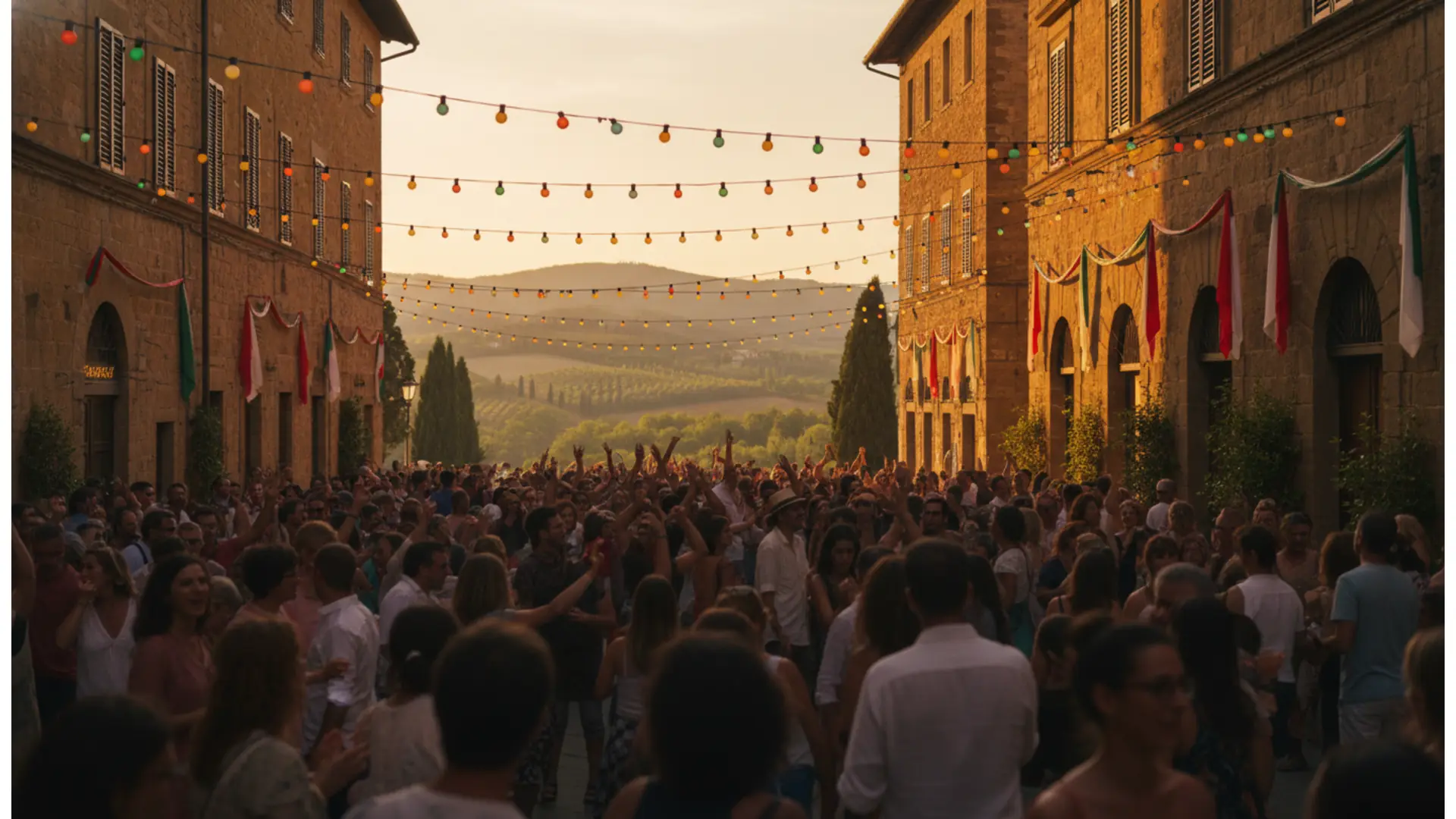
Santa Fermina Patronal Feast
Civitavecchia celebrates its patron saint, protector of seafarers
About Santa Fermina
A festival that captures the maritime soul of Civitavecchia
The Santa Fermina Patronal Feast is the most cherished religious and civic event in Civitavecchia, located in the Lazio region within the Metropolitan City of Rome Capital. Every year on April 28th, the Tyrrhenian city gathers around its patron saint, a 3rd-century young martyr venerated as the protector of seafarers and seafaring folk. Promoted by the Municipality of Civitavecchia in collaboration with the Diocese of Civitavecchia-Tarquinia, the occasion weaves together popular devotion, maritime tradition, and historical memory in a day that engages the entire community.
The story of Santa Fermina
According to tradition, Fermina was a young Christian of Roman origin forced to flee during the persecutions of the Diocletian era. Upon arriving on the Lazio coast, she reportedly found refuge for a time in a cave near the port of Civitavecchia before reaching Amelia, in Umbria, where she suffered martyrdom. The legend of a storm calmed during her voyage to Civitavecchia is linked to the saint: for this reason, the city proclaimed her patron saint and protector of sailors. The bond with Amelia, where Fermina is also the patron saint, remains vibrant through a historic twinning between the two cities.
The day of April 28th
Celebrations begin in the morning with Mass in the chapel dedicated to the Saint at Forte Michelangelo, a symbol of the port and the city. The notes of the Giacomo Puccini musical band resonate through the streets of the historic center, while in Piazza Vittorio Emanuele, the meeting between the mayors of Civitavecchia and Amelia is renewed, accompanied by the City of Amelia Flag-wavers Group. The Amelia historical pageant reaches the Cathedral, where the solemn Pontifical Mass is celebrated, accompanied by choral singing.
The procession and the blessing of the sea
In the afternoon, the city experiences its most intense moment: the procession with the relics and the statue of the Saint traverses the center with symbolic stops in front of the Carabinieri barracks, in Piazza Regina Margherita, at the Guglielmi Terrace, and finally toward the port area, where the blessing of the sea is renewed in memory of maritime workers and lost seafarers. The ancient traditions of the festival are complemented by powerful symbols of the city's maritime identity.
Faith, community, and identity
The Santa Fermina Feast is not merely a liturgical recurrence: it is a moment in which Civitavecchia reaffirms its vocation as a seaside city and its bond with history and the community of Amelia. For residents and visitors alike, it is an opportunity to discover the historic center, Forte Michelangelo, and the waterfront in a festive atmosphere filled with music, pageants, and popular devotion.
- Where: historic center of Civitavecchia, Cathedral of San Francesco d'Assisi, Forte Michelangelo, and port area
- When: April 28th every year
- Highlights: pontifical mass, Amelia historical pageant, flag-wavers, procession, and blessing of the sea
Santa Fermina — edition 2026
The 2026 festival renewed the ancient bond between Civitavecchia and Amelia in the name of their shared patron saint, combining liturgical and civic moments in the heart of the historic center.
An edition marked by the participation of the local community, civil and religious authorities, and historical groups from the two twinned cities.
Programme Santa Fermina 2026
Program for Tuesday, April 28, 2026
- 8:30 AM — Holy Mass in the chapel dedicated to the Saint at Forte Michelangelo, presided over by Bishop Msgr. Gianrico Ruzza
- 9:00 AM — The Giacomo Puccini musical band parades through the streets of the historic center
- 10:15 AM — Meeting of the mayors of Civitavecchia and Amelia in Piazza Vittorio Emanuele, with the City of Amelia Flag-wavers Group
- 10:30 AM — Arrival of the Amelia historical pageant at the Cathedral (departure from Piazzale degli Eroi)
- 11:00 AM — Solemn Pontifical Mass, accompanied by choral singing
- 5:00 PM — Procession with the relics and the statue of the Saint through the city, with stops in front of the Carabinieri barracks, in Piazza Regina Margherita, and at the Guglielmi Terrace, continuing to the port area for the blessing of the sea
Due to ongoing works at the port, the traditional sea-based procession did not take place; instead, the ancient custom of cannon fire in honor of the Saint was renewed.
Highlights Santa Fermina 2026
- Pontifical Mass in the Cathedral
- Twinning with the Umbrian town of Amelia
- Amelia historical pageant and City of Amelia Flag-wavers Group
- Procession with the relics and statue of the Saint
- Blessing of the sea and traditional cannon fire
Prices Santa Fermina 2026
Practical information — Santa Fermina
How to get there
Civitavecchia is served by the train station on the Rome-Pisa line, with frequent connections from Rome Termini and Rome Ostiense (approximately 45-70 minutes). By car, it can be reached via the A12 Rome-Civitavecchia motorway and the SS1 Aurelia road. The reference airport is Rome Fiumicino, about an hour away.
Practical tips
The celebrations take place in the historic center: it is recommended to reach the area on foot, as some streets are closed to traffic during the procession. Participation in religious and civic events is free and open to all. Do not miss a stroll along the waterfront and a visit to Forte Michelangelo.
Festival-goer photos
No photos yet. Share yours!
Share your photos
5 photos max, 5 MB per photo (JPG, PNG, WebP)
Noticed an error or missing information?
Help us keep this listing up to date. Every proposal is verified by our team before publication.
Festival-goer reviews
No rating yet — be the first!
No comments yet. Be the first!
Were you there?
Share your experience with the community.
Published by Valentin Contard, festival listings writer. Reviewed, corrected and approved by Christophe Contard, editor-in-chief. .
Where does it take place — Santa Fermina
Cattedrale di San Francesco d'Assisi e centro storico