Procession of the Dead Christ – Living scenes of the Via Dolorosa
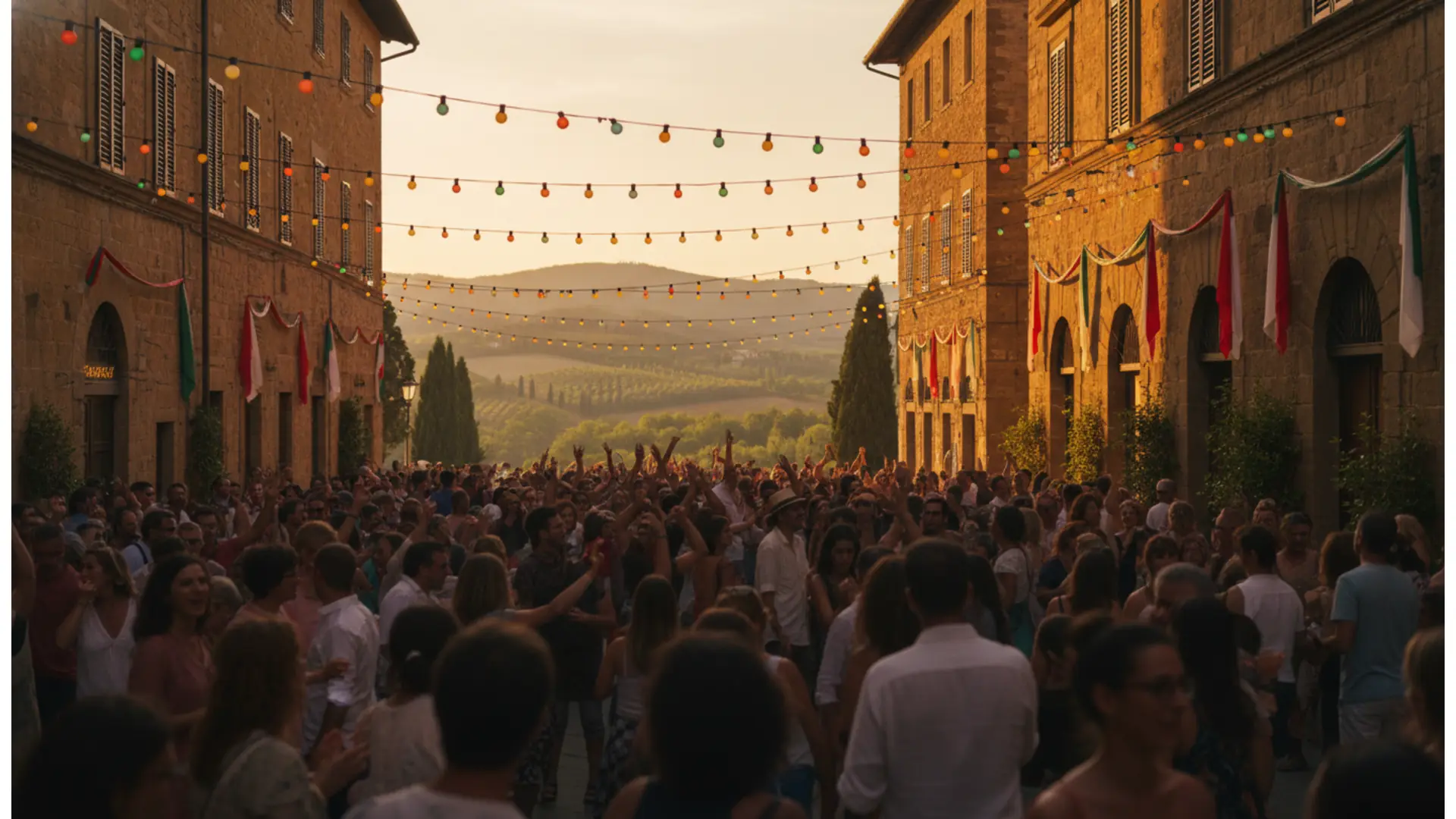
The re-enactment of Good Friday in the medieval village of Saltara, amidst torches and living scenes
About Dead Christ of Saltara
A tradition spanning centuries
The Procession of the Dead Christ in Saltara is one of the most heartfelt Good Friday re-enactments in the Marche region. Its origins lie in the medieval period, but it has taken its current form since 1847: in that year, the Confraternity of Our Lady of Sorrows staged the procession for the first time, initiating a tradition passed down for almost two centuries. Saltara, now a part of the Municipality of Colli al Metauro in the Province of Pesaro and Urbino, thus preserves one of the most evocative Easter rites of the Marche hinterland.
The village becomes a stage
As evening falls, the historic centre of Saltara is illuminated solely by the light of torches: shadows dance along the ancient medieval walls, and the village transforms into a natural stage that transports you back in time. Along the procession route, living scenes of the Via Dolorosa are set up, tableaux of the Passion that allow the viewer to fully immerse themselves in the spirit of this ancient tradition.
Over 250 participants
The procession, composed of over 250 costumed participants, is entirely animated by the local residents. Leading the procession are the Roman soldiers on foot and horseback who, along with the centurion, escort Simon of Cyrene: an emblematic and penitent figure who, barefoot and hooded, carries a heavy cross on his shoulders. His identity remains secret, fueling curiosity and deep emotion. Following are the four local Confraternities with their medals and ancient lanterns, the apostles, the holy women, and the townspeople. Closing the procession is the ancient bier with the statue of the dead Christ, resting on the knees of the Sorrowful Mother.
A communal rite of the village
The Procession of the Dead Christ is, above all, a community event: every role is played by the residents of Colli al Metauro, and the entire village participates in the setup. The slow pace of the procession, marked by the rhythm of the drums, and the solemn atmosphere make this event a moment of great spiritual and cultural intensity, capable of attracting visitors from all over the Province of Pesaro and Urbino and the entire Marche region.
Organizers
The event is organized by the Pro Loco Saltara APS in collaboration with the Municipality of Colli al Metauro and the Parish of San Giovanni Apostolo, heirs of the Confraternity that revived the tradition in 1847.
Dead Christ of Saltara — edition 2026
For Good Friday 2026, the medieval village of Saltara, part of Colli al Metauro (PU), renewed on April 3rd one of the most evocative Easter rites of the Marche region. At 9:00 PM, the long procession of over 250 participants departed from the Church of Villa: at the front were the Roman soldiers on foot and horseback with the centurion, escorting the barefoot and hooded Simon of Cyrene with the cross on his shoulders. Behind him were the four Confraternities with medals and lanterns, the apostles, the holy women, and the townspeople, up to the ancient bier with the statue of the dead Christ resting on the knees of the Sorrowful Mother.
Along the route, in the alleys illuminated only by torches, the living scenes of the Via Dolorosa were staged. The event was curated by Pro Loco Saltara APS with the Municipality of Colli al Metauro and the Parish of San Giovanni Apostolo.
Programme Dead Christ of Saltara 2026
Friday, April 3, 2026 — Good Friday
- 9:00 PM — Departure of the procession from the Church of Villa, in the historic centre of Saltara.
- Opening of the procession with Roman soldiers on foot and horseback and the centurion.
- The hooded, barefoot Simon of Cyrene carries the heavy cross, escorted by the soldiers.
- The four local Confraternities parade with medals and ancient lanterns, followed by the apostles, the holy women, and the townspeople.
- Living scenes of the Via Dolorosa set up along the route, in the torch-lit alleys.
- Closing of the procession with the ancient bier carrying the statue of the dead Christ resting on the knees of the Sorrowful Mother.
The procession moves slowly to the rhythm of the drums through the medieval village.
Highlights Dead Christ of Saltara 2026
Prices Dead Christ of Saltara 2026
Practical information — Dead Christ of Saltara
When
The procession takes place every year on Good Friday, starting in the evening around 9:00 PM.
Where
Historic centre of Saltara, part of Colli al Metauro (PU). The procession starts from the Church of Villa and winds through the alleys of the medieval village.
How to get there
By car: Saltara is accessible from the SS73 bis Urbinate and the Fano–Grosseto expressway (Calcinelli/Colli al Metauro exit). The nearest train station is Fano, on the Adriatic line, from where you can continue by car or bus towards the hinterland.
Tips
Admission is free. It is advisable to arrive early to find a spot along the route and to wear comfortable shoes for the cobbled village alleys. As this is an evening rite by torchlight, it is advisable to wear clothing suitable for cool early spring evenings.
Festival-goer photos
No photos yet. Share yours!
Share your photos
5 photos max, 5 MB per photo (JPG, PNG, WebP)
Noticed an error or missing information?
Help us keep this listing up to date. Every proposal is verified by our team before publication.
Festival-goer reviews
No rating yet — be the first!
No comments yet. Be the first!
Were you there?
Share your experience with the community.
Published by Valentin Contard, festival listings writer. Reviewed, corrected and approved by Christophe Contard, editor-in-chief. .
Where does it take place — Dead Christ of Saltara
Centro storico di Saltara
Centro storico di Saltara, 61036 Colli al Metauro